


NavigationInf NavigationInf
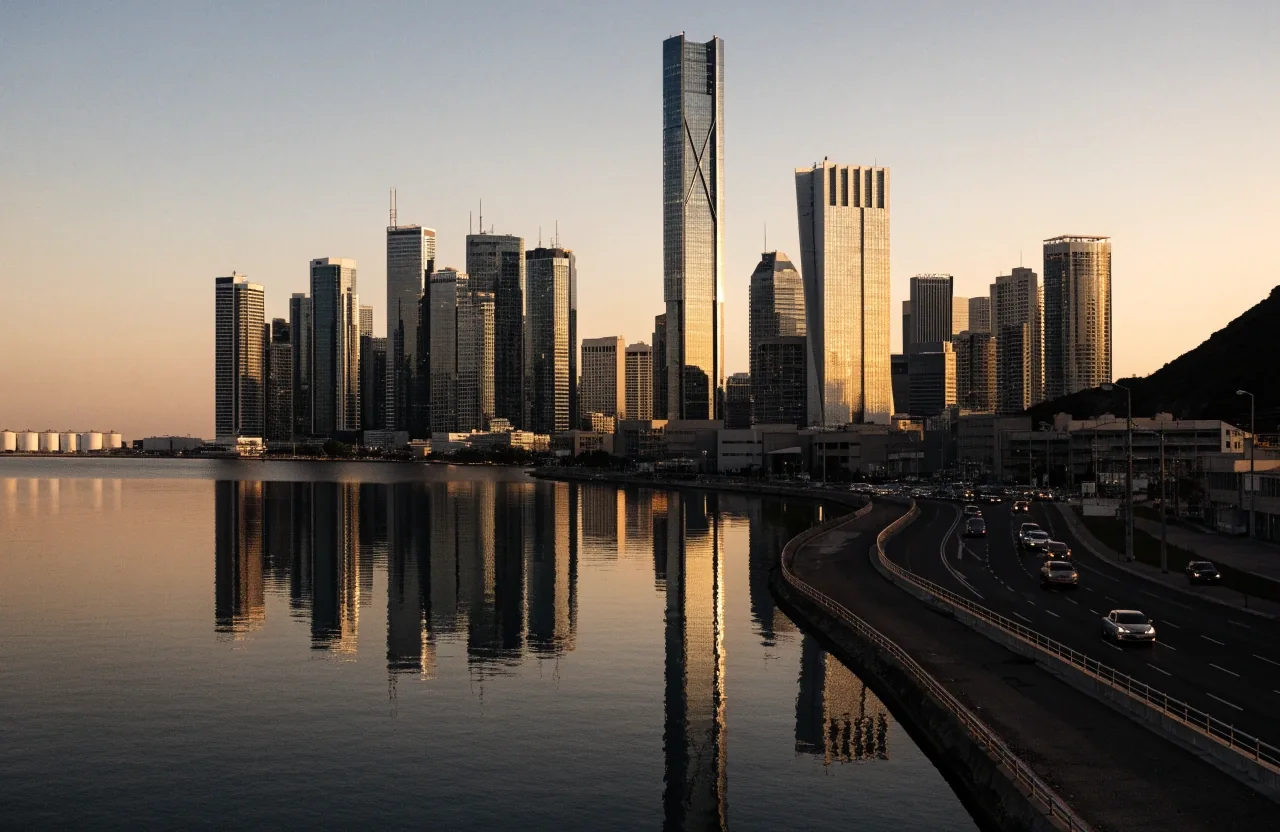
Coastal Dubai expressway at dusk seen from an overpass, warm horizon over deep road shadow

Session run reported Oct 2, 2026

UAE stocks weaken as US-Iran deadlock weighs on sentiment

Dubai's benchmark closed lower for a fourth straight session and Abu Dhabi's for a seventh, as stalled US-Iran negotiations kept risk appetite tight across both markets.

Dubai · four sessions lower Abu Dhabi · seven sessions lower Source · Reuters, 2 Oct 2026

Both benchmarks closed lower

Both UAE benchmarks closed lower after stalled US-Iran negotiations hurt risk appetite. Reuters reported the move on Oct. 2, 2026, with Dubai's index falling for a fourth straight session and Abu Dhabi's declining for a seventh consecutive session.

Nothing in the two sessions pointed to a single trigger. What the runs describe is a mood that shifted once and then held: each session opened with the same read on the stalled talks, and each closed with sellers still in control. That persistence, more than the size of any one day, is the story worth following.

What this page covers

  • Why a session run matters more than one bad afternoon
  • How stalled negotiations reach a market that carries no Iranian earnings
  • What a wider risk premium changes in borrowing and project planning

Session by session

The session run, not a single day

Four consecutive down sessions in Dubai and seven in Abu Dhabi describe a persistent mood rather than one bad afternoon. Session runs matter because they show whether sentiment shifted once or stayed shifted. Reuters reported both benchmarks closing lower on Oct. 2, 2026.

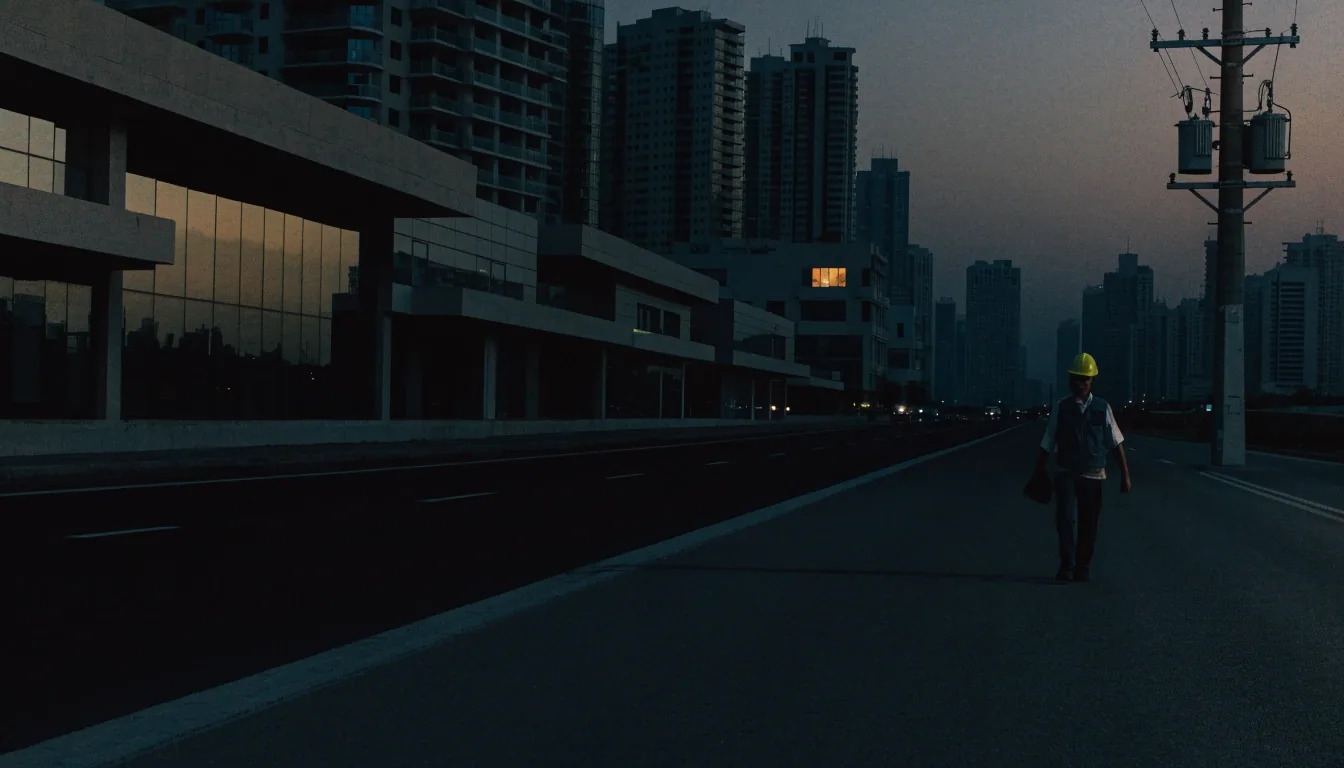
Gulf financial district street at dusk with long shadows across the pavement

Dubai's benchmark

A fourth straight session lower

Dubai's benchmark index fell for a fourth straight session, according to Reuters. The emirate's market is weighted toward real estate, banking and transport-linked names, which makes it sensitive to how regional stability is read. A run of declines signals that the read turned negative and stayed there.
Abu Dhabi's benchmark

Seven sessions of decline

Abu Dhabi's index declined for a seventh consecutive session, a longer run than Dubai's. A seven-session slide is a sustained move, and it points to how broadly risk appetite tightened across the two markets. Reuters reported both in the same account.

A run that long is not usually the work of one headline. It suggests buyers stayed on the sidelines session after session, waiting for something in the regional picture to change before committing again.

Abu Dhabi office district plaza at dusk with warm low light on the paving

Why stalled negotiations move markets here

The transmission channel

Diplomatic signals reach Gulf equities through sentiment, not through earnings. When talks stop progressing, the regional risk premium widens and investors trim exposure ahead of anything concrete changing.

Stalled US-Iran talks affect Gulf markets through risk appetite, not through direct earnings.

Neither UAE benchmark carries meaningful exposure to Iranian revenue, so a trading desk cannot point to a company whose results changed overnight. What changed is the price investors are willing to pay for regional exposure at all. That is why newsroom coverage of the talks belongs on the same page as the market close — the first is the input, the second is the readout.

The same logic runs in reverse when talks resume. A credible step forward can tighten the premium before any bilateral agreement is signed, which is one reason regional desks watch the negotiating calendar as closely as the earnings calendar.

Sources: Reuters, reported 2 October 2026.

What a wider risk premium means

A wider risk premium raises the return investors demand for holding regional assets, which pressures prices before any fundamentals change. It also affects borrowing costs and project sentiment over time. For a market like the UAE, where infrastructure and real estate pipelines are large, that second-order effect is the one worth watching.

The equity move is the visible part. The slower part shows up later, in how a developer or a transport operator prices the cost of capital for a long-dated project, and in how much buffer a lender builds into a regional facility. Both are decided in quiet meetings, not on an exchange floor, but both start from the same premium.

Gulf urban corridor at last light with one warm window key on the horizon

Infrastructure and property pipelines carry the slower part of the adjustment.

Attribution and limits

What we can and cannot print

This report is built on Reuters' account, dated Oct. 2, 2026. We do not add index levels, percentage moves or forecasts that the source did not publish. The rows below show where our coverage is charted, where it is still extending, and where it stops.

Session runs
Both benchmarks, as reported
Charted
Index levels
Not published by the source
Extending
Forecasts
We have not printed a direction call, and we will not until there is a published basis for one.
Uncharted
Regional backdrop
Hormuz transit and Gulf shipping
Extending
Aerial view of a Gulf highway interchange at dusk with layered curving ramps

Regional backdrop

Tension in the strait, read from the road

The market move sits alongside a wider pattern of regional tension, including deepening uncertainty around the Strait of Hormuz and the Gulf shipping picture. Iran and Oman finalized coordinates for designated safe transit routes through the strait, with details to be shared with the relevant international maritime body. Market coverage and security coverage on this site are connected for that reason.

Safe transit routes through Hormuz

Where to follow next

Economy carries the UAE-specific market stories, while Markets covers the regional and global view. The weekly briefing groups both with the transport and shipping items that feed into them. Subscribing is the simplest way to follow a session run as it develops.

Related reporting this week

Weekly briefing

One email a week grouping the UAE market stories with the transport, shipping and road items that feed into them. The sign-up lives on its own page.

Subscribe to the weekly briefing

Reading the next session

Session runs end somewhere, and the ending is the part worth tracking. If either benchmark closes higher while talks remain stalled, the mood changed without the input changing — and that is the signal desks will be arguing about the next morning.

If you have a question about a specific market report, the newsroom desk answers by phone during working hours on weekdays. For anything about our sourcing or correction policy, Editorial Standards lays it out in full.

Newsroom desk

Office 402, Al Thuraya Tower 1, Dubai Media City, P.O. Box 500001, Dubai, UAE

+971 4 391 2244

info@navigationinf.info

Monday to Friday, 9:00 AM – 6:00 PM

Contact the newsroom