
Dialect
Falcon-Emirati
Built for Emirati Arabic rather than formal Arabic, which is the version most general models were trained on.

Covering AI, autonomous fleets and the mapping layer under UAE roads
Technology & Mobility covers the systems reshaping how people and goods move in the UAE: Arabic-language AI, autonomous fleets, government platforms and the mapping layer underneath them.
Arabic-language AI
The Technology Innovation Institute unveiled three AI models aimed at Emirati Arabic and multilingual processing. Together they address a gap that general-purpose models handle poorly: regional dialect and Arabic document formats. Each one covers a different kind of input, and the three together set a new floor for what a UAE-built service can assume about language.
For a newsroom that tracks navigation and public-service software, that distinction matters. A voice assistant in a car and a counter clerk scanning a form are running the same kind of model, just pointed at different ends of the problem.
Read the AI models storyDialect
Built for Emirati Arabic rather than formal Arabic, which is the version most general models were trained on.
Speech
Converts speech in several languages into text, which is the step voice-driven navigation depends on first.
Documents
Extracts Arabic text and structured content from images and documents, layout included.
Dialect variation, transliteration habits and mixed Arabic-English text make Emirati Arabic difficult for models trained mostly on formal Arabic and English. A sentence that mixes a dialect word, a brand name written in Latin letters and a government term in formal Arabic is normal speech here, and it is close to worst-case input for a model that learned its Arabic from news archives.
Speech recognition suffers first, because dialect leakage into transcription produces errors that compound downstream. A misheard destination is not a small mistake when the next system in the chain is a routing engine or a booking form. A model built specifically for the dialect changes the baseline for voice-driven services, including navigation and public-service apps. It does not remove the errors; it moves the starting point.
A dialect model does not make the transcription perfect. It changes what the rest of the service can assume is already correct, and that assumption is what most voice interfaces quietly depend on.
What trips a model up
Documents
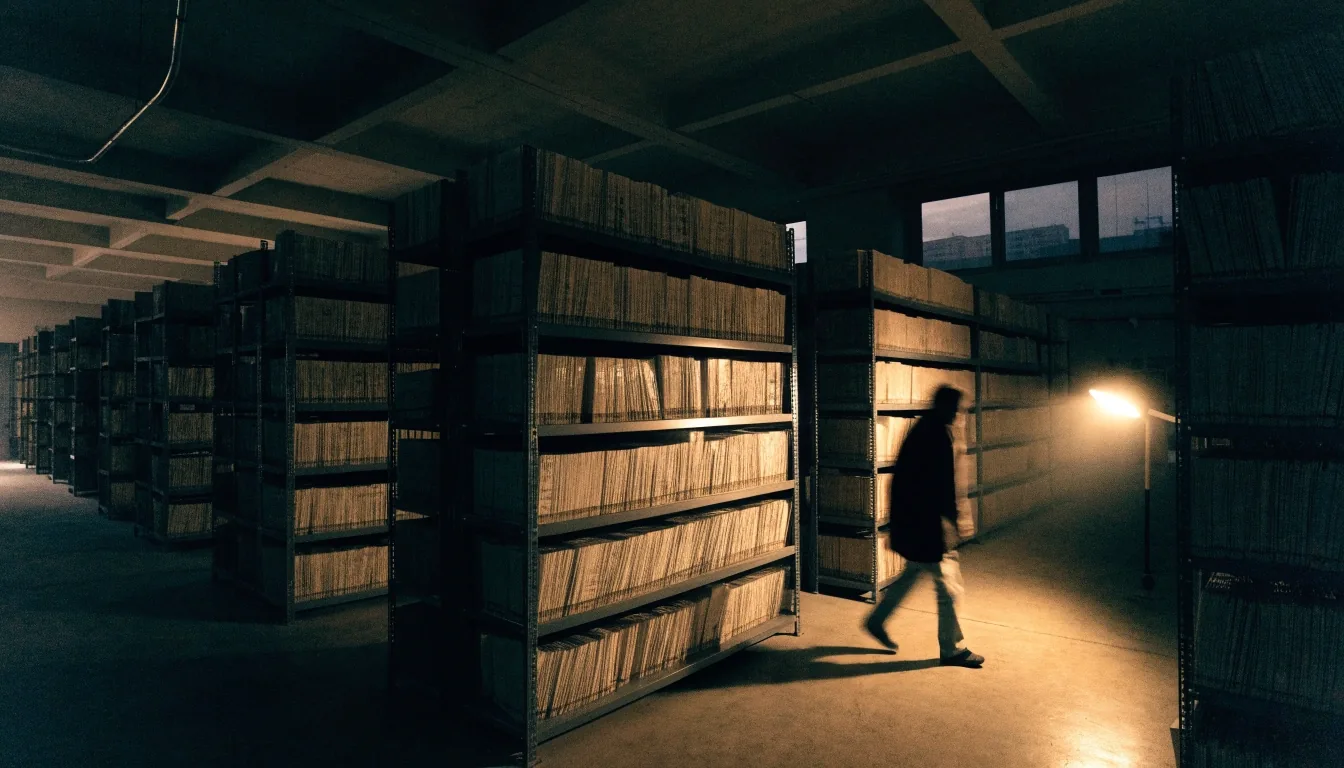
Falcon-OCR-Arabic is aimed at extracting Arabic text and structured content from images and documents. In practice, that covers everything from scanned forms to photographed paperwork where the layout carries as much meaning as the words. Which box a number sits in can matter more than the number.
Document processing is unglamorous and it is often the step that decides whether a digital service works or stalls. A permit, a registration, a delivery manifest: each one is a layout problem before it is a language problem. Fix that step and the rest of the chain moves; leave it manual and every downstream claim about speed gets weaker.
Read the AI models storyWhere the handoff usually breaks
A scanned form reaches a service as an image. Until something reads the layout, a human is the parser — and the queue behind that human is where launch dates quietly slip.
Government platforms
Abu Dhabi's Department of Government Enablement plans to launch Tamm 5.0 at Gitex Global in December. The platform currently serves about 4.7 million users and handles most transactions within a day. Officials said the broader goal remains becoming the world's first fully AI-native government, while keeping human accountability central.
We cover the app release as infrastructure, not as a slogan. That means the version number, the stated launch window, what officials said about accountability, and what remains unstated. A government service that answers in a day is a different product from one that answers in three weeks, and the difference is usually decided long before any model is chosen.
Read the Tamm 5.0 storyWhat this beat is tracking
Arabic AI models
Models released, dialect scope stated
Charted
Autonomous fleets
Depot capacity and remote supervision
Extending
Addressing and signage
Updates that reach map data first
Charted
Charging corridors
Uncharted
Testing permits
Approvals that bound launch dates
Extending
More than 10,000 autonomous taxis and delivery vans are expected to operate in the UAE next year, according to a Khaleej Times report.
Fleet operations
The published report dates the figure to next year and attributes it to a Khaleej Times report, not to a regulator. We keep that attribution attached, because the difference between a projection and an operating permit is the whole story on this beat.
Read the autonomous vehicles storyWhat changes at thousands
Depot capacity, remote supervision, curb access and mapping currency. A robotaxi that waits too long for a depot slot is not a software problem, and a van that cannot find a legal place to stop at 6pm is not one either.
Where it would show up
Those routes are already mapped in fine detail, which is why expansions tend to start there rather than in unlit suburban streets with changing roadworks and informal drop-off points.

Autonomous routing leans on interchange geometry that is already mapped in detail.
The layer under the surface
Autonomous fleets depend on map data that stays current, which is why addressing changes and road restrictions are technology stories as much as urban ones. A new sign or a restricted corridor is a data update before it is a physical one. Somebody has to survey it, attribute it, and ship it before a vehicle can rely on it.
That overlap is deliberate in our coverage, and the Urban section carries the other half. When a city changes its addressing system, the effects show up twice: once on the street, and once as a version bump nobody outside the industry notices.
Vehicle approvals, testing zones and data rules determine how fast any of this scales. Government coverage on NavigationInf tracks those decisions, because a launch date in a press release and an operating permit are different things. We report what officials state and date it, rather than projecting timelines.
The practical consequence is that readers can tell which claims are dated and sourced and which are still open questions. That matters most in the weeks before a scheduled launch, when the noise peaks and the permits are the only reliable signal.
Open the Urban sectionGovernment decisions are covered as dated statements, not as forecasts.

Technology & Mobility publishes when there is something concrete: a model release, an app version, a fleet milestone backed by an official statement. Quality over cadence — we would rather wait a week than explain a story we got ahead of.
The weekly briefing groups those items with the transport and government stories they touch. Subscribing keeps the beat in one place, dated and credited, so a month from now you can tell what moved and what did not.
Questions readers ask
Officials said the vehicles operate at smaller scale in Abu Dhabi and Dubai, with a larger expansion expected next year. That expansion figure came from a press report rather than a regulator, and we flag the difference.
It is built to extract Arabic text and structured content from images and documents, according to the Technology Innovation Institute. Structured content means it reads the layout too, not only the characters.
We report what officials state and date it. A launch date in a press release and an operating permit are different things, so we attribute each one to whoever said it and leave projections out. Our editorial standards page explains how that works in full.
Transport & Urban handles signage, addressing and road rules; Markets covers the business side when it moves on the same story. The weekly briefing collects them together so a single event does not read as three unrelated items.
The three stories below are the spine of our current technology and mobility coverage. If you are new to the beat, the AI models story is the clearest place to start; the fleet expansion story shows what scaling looks like on the ground.
Newsroom
Office 402, Al Thuraya Tower 1, Dubai Media City, P.O. Box 500001, Dubai, UAE