NavigationInf NavigationInf
Coastal Gulf road corridor at dusk seen from an overpass, palm silhouettes in the foreground

Technology & Mobility report — 8 October 2026

Abu Dhabi launches Emirati-focused AI models for speech and text

The Technology Innovation Institute has unveiled three models built around Emirati Arabic and multilingual documents. Here is what each one is for, and where the public record currently stops.

Falcon-Emirati · Falcon-ASR · Falcon-OCR-Arabic — announced scope only, performance figures unpublished at time of writing

Three model releases, one announcement, three different jobs. Falcon-Emirati is aimed at Emirati Arabic. Falcon-ASR turns speech in several languages into text. Falcon-OCR-Arabic pulls Arabic text and structured content out of images and documents. Reading them as one project hides the useful part: each of the three fails in a different way, and each replaces a different piece of manual work.

For a UAE newsroom, the interesting question is not whether the models are impressive. It is which Arabic-language services change shape if dialect handling, transcription and document extraction get noticeably better at the same time. That question runs through government forms, call centres and the road and transport platforms this site already covers.

What arrived

  • Falcon-Emirati Language modelling tuned to how Emirati Arabic is actually written and spoken.
  • Falcon-ASR Speech recognition across several languages, including switches inside one sentence.
  • Falcon-OCR-Arabic Arabic text and structured fields lifted out of scans, photos and paperwork.

Three models, three jobs

The release covers language modelling, speech recognition and document reading. Keeping the three apart is deliberate: dialect handling, transcription and document extraction have different failure modes, and a system that hides one behind another will pass a demo and fail a queue of real files.

Language

Falcon-Emirati sets a dialect baseline

A general model trained mostly on formal Arabic and English treats Emirati speech as an exception. This one is built around the dialect itself, which changes what voice-driven services can assume about their input before any product work starts.

Useful where the text output feeds something else: search, case notes, routing, customer records.


Speech

Falcon-ASR turns speech into written text

Transcription is the step most likely to be taken for granted. Every downstream decision — a call summary, a complaint category, a hearing transcript — inherits whatever the recogniser heard, including the errors.

Matters most where a single misheard word changes a case outcome rather than a search result.

Documents

Falcon-OCR-Arabic reads Arabic paperwork

Reading characters is the easy half. Structured extraction — fields, layout, the relationship between a stamped block and the line it refers to — is where a scan stops being an image and starts being usable data.

This is the layer most public services quietly depend on and rarely describe.

Staff desk inside a Gulf government service office lit by warm late-afternoon window light
Service counters are where dialect and document handling meet the public.

Where errors multiply

A misheard word in a call summary can miscategorise a request. A misfiled field in a scanned form can send an application back to a human desk. Small recognition errors rarely stay small once they enter a workflow.

Why Emirati Arabic needs its own model

Dialect variation, transliteration habits and sentences that switch between Arabic and English make Emirati Arabic hard for a model trained mainly on formal Arabic and English. The written register and the spoken register drift apart, and everyday text on a phone rarely matches the grammar a language textbook would use.

Speech recognition feels that gap first. When dialect leaks into a transcript, the errors compound: the transcript is wrong, the summary built from it is wrong, and the routing decision made from the summary is wrong. Correcting the model at the dialect level changes the baseline that every voice-driven service starts from, rather than asking each downstream team to patch the damage.

For Arabic-language services, that is the difference between launching a voice feature and quietly withdrawing it six months later because nobody trusts the output.

Trucks moving along a night freight corridor under warm street lighting on the edge of a Gulf city

Falcon-ASR and multilingual speech

One sentence, two languages, one transcript

Falcon-ASR converts speech in several languages into text, which matters in a country where conversations routinely mix Arabic and English. Multilingual transcription is harder than single-language transcription because the model has to detect the switch without losing accuracy at the moment it happens.

That capability sits underneath call centres, transcription tools and voice interfaces. A dispatch office answering in Arabic and relaying a plate or route name in English is the ordinary case, not the edge case — and it is exactly where a single-language model starts guessing.

Falcon-OCR-Arabic and document processing

Reading a form is not the same as understanding it

Falcon-OCR-Arabic is built to extract Arabic text and structured content from images and documents. Structured extraction goes further than reading characters: it captures fields, layout and the relationships between them, so a scanned page can arrive as something a system can route instead of something a person has to retype.

Document processing is often the step that decides whether a digital public service works. A portal can be well designed and still stall at the upload, because the file behind the upload was never machine-readable in the first place.

What structured extraction has to survive

  • Photographed pages that are slightly skewed, shadowed or cropped at one edge.

  • Fields whose meaning depends on where they sit on the page, not just what they say.

  • Mixed Arabic and Latin script inside one line, where a rule that works for one breaks the other.

  • Tables and stamped blocks that carry relationships a flat text dump destroys.

Why this connects to government services

Arabic-language document handling sits underneath a lot of what government platforms do, from form submission to identity verification. Better extraction reduces manual review and speeds up processing. That link is why this release belongs in the same conversation as Abu Dhabi's platform plans rather than in a research digest.

The table below states what the announcement actually covers, and where the published record still goes quiet. We have kept the gaps visible instead of filling them with estimated numbers.

Service step

What the release states

Record

Form submission

Extraction of Arabic fields from uploaded documents

Stated

Identity verification

Arabic text and structured content from images

Stated

Voice enquiries

Multilingual speech converted to text

Stated

Benchmark results

Not in record

Deployment timing

Not in record

States refer only to whether a service area appears in the announcement. They are not an assessment of model quality.

Regional AI and language technology

Gulf investment in Arabic-language AI has been driven by the gap between formal Arabic training data and how people actually write and speak. Emirati-specific models address the narrow end of that gap. The broader multilingual coverage in Falcon-ASR and Falcon-OCR-Arabic handles the mixed-language reality of institutions in the region, where an Arabic letter and an English invoice can sit in the same file tray.

Read together, the three models describe a stack rather than a single product. Dialect-aware language modelling underneath, speech conversion in the middle, document extraction at the surface where the citizen actually touches the system. Each layer can be adopted on its own, and each one fails visibly if the layer beneath it is weak.

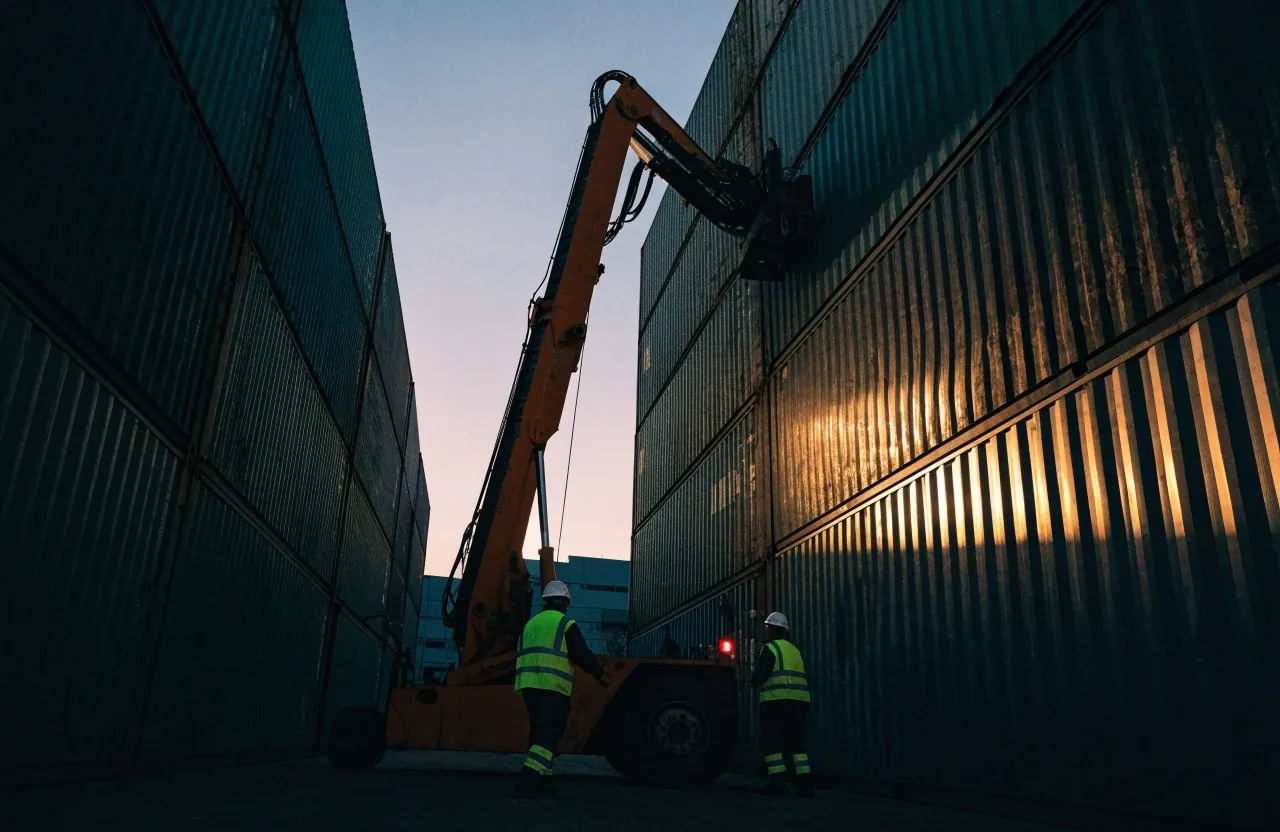
Container port apron at dusk in the Gulf with stacked containers and a reach stacker under floodlight
Trade, logistics and public platforms all run on paperwork that has to be read correctly.

Charted but uncertain

What is not yet known

The announcement describes the models and their intended purposes. It does not, in what we have published here, set out benchmark results or deployment timelines. We report the stated scope and leave performance claims to the technical documentation rather than inferring them from a product name.

That restraint is deliberate. Transcription and extraction numbers depend heavily on the test set, the audio conditions and the document quality. A figure that looks strong on studio recordings can look very different on a phone call from a moving vehicle.

We will update this page when documentation, results or launch dates become available. Until then, treat the three model names above and their stated purposes as the full extent of what has been published.

Read our editorial standards

Where to follow this

Technology & Mobility carries AI and autonomous vehicle coverage. Government covers platform and policy developments, including the Tamm app. The weekly briefing groups them together, which is useful when a model release and a service launch land in the same week and the connection between them is easy to miss.

Related reading: Abu Dhabi prepares a refreshed Tamm app as it pushes toward AI-native government, which covers the platform side of the same shift.

Questions readers sent

Short answers to what came in after the story ran. If your question is not here, the newsroom address is on the contact page.

Are these models free to use?

The announcement covers what the models are for, not the licensing terms. We have not published a licence claim here because the release we worked from did not state one. When terms are published, they belong in the technical documentation, not in a news summary.

Does Falcon-Emirati replace Falcon models for general Arabic?

Nothing in the announcement frames it that way. The three releases are described by their intended purposes, and each addresses a different step. Treating them as a replacement chain would be our inference, not the stated scope.

Why does Arabic OCR need its own model at all?

Arabic text carries joining forms and diacritics that change a letter's shape depending on its position, and official documents add stamps, tables and field layouts on top of that. Extraction tuned to those patterns is doing a different job from reading clean Latin print.

Is this connected to the Tamm app work?

Both belong to the same push toward AI-native government services in Abu Dhabi, and the practical overlap is document handling. The announcement does not name the app, so we are not claiming a direct link. Our Tamm coverage is separate and worth reading alongside this piece.

Where would these models show up first in daily life?

The most plausible first touchpoints are the ones already handling mixed-language Arabic input: service counters, call centres, document uploads and voice assistants. Those are the places where dialect, transcription and extraction already cause rework today, and where an improvement would be noticed by staff before it is noticed by the public.

How this page was reported

This report is written from the announcement of three Emirati-focused AI models and the stated purpose of each. Where the announcement is silent — benchmark figures, licensing, deployment dates, named partner platforms — we have said so in the text instead of estimating a number that reads as fact.

Anything on this page that changes — new documentation, published results, launch windows — will be dated when it is added. Corrections and additional context are welcome at the newsroom contact page.

Published 8 October 2026

NavigationInf · Dubai Media City